7 Simple Habits That Raise Emotionally Strong Children in Today’s Digital World
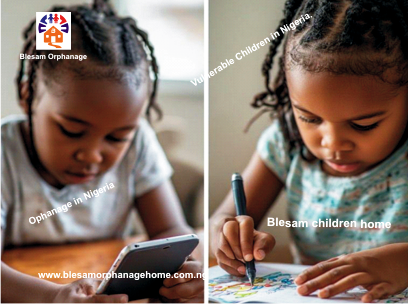
7 Simple Habits That Raise Emotionally Strong Children
Raising children today sometimes truly feels like trying to grow a garden beside the busy Lagos-Ibadan expressway, with noise everywhere and distractions everywhere, yet life still finds a way to bloom. At Blesam, we’ve seen children thrive not because life was perfect, but because someone showed them steady care, clear guidance, and patience every single day.
In this digital world that is currently filled with screens and constant pressure, emotionally strong children are not raised by chance. They are raised through simple habits practiced faithfully at home and in caring communities.
Why Emotional Strength Matters
Research has long shown that children who experience consistent, supportive care giving are more likely to develop stronger mental health, perform better in school, and build healthier relationships over time. UNICEF and child development researchers have documented this across different communities and cultures, not as theory, but as observed patterns in children’s lives. Early emotional support shapes how a child sees themselves and how they handle difficulty as they grow. It builds the kind of quiet resilience that helps young people say no to the wrong crowd, push through setbacks, and eventually show up for others the way someone once showed up for them.
Emotional strength is not about suppressing feelings. It is about learning to understand them and respond with intention rather than impulse.
7 Simple Habits Families Can Practice
1. Create Daily Connection Time
Just 15 minutes of undistracted conversation can make a massive difference. Learn to ask children about their day and listen carefully.
When a child who usually stays in the background, the one a teacher might easily describe as “too quiet,” starts going for evening walks with an adult who just listens and gives him or her full attention, things start to change. It isn’t a loud or sudden shift. It’s more like a slow opening up.
Within weeks, the same child who went unnoticed is the one teachers are describing as more confident and more present. The change might be surprising, but it isn’t strange. It is the result of consistent, unhurried attention from someone who showed up.
Connection, when done correctly, helps to build confidence.
2. Teach Healthy Screen Boundaries
Children need guidance, not just rules. Set limits on screen time, keep phones away during meals, and encourage offline activities like reading, chores, sports, or creative play. When kids learn to put down the screen and pick up a book, a ball, or even a mop, they build the kind of real-world skills and attention spans that apps cannot teach them.
Balanced screen use improves sleep, focus, and emotional stability. The World Health Organization has flagged excessive screen time as a growing concern for children’s mental health globally, and what they’re describing in their research, many Nigerian parents are already seeing at home: restless kids, broken sleep, and shorter attention spans. If you want to understand just how seriously this is being taken worldwide, their mental health guidance for children is worth reading, it puts numbers to what most parents already feel in their gut.
3. Model Emotional Control
Children learn by watching adults. When caregivers handle anger calmly, apologize when wrong, or speak respectfully, children copy those behaviors. You have to be conscious of what you do before kids. They are quietly learning from you.
This isn’t just parenting wisdom passed down through generations, child development researchers have observed the same thing across cultures: the habits a child builds early, whether it’s brushing their teeth or managing their emotions, tend to follow them into adulthood.
4. Encourage Problem-Solving
Instead of solving every problem for a child, guide them to think. You can help them with a clue but sometimes encourage them to think. And be patient with them if they are not learning fast. Avoid harsh responses. You can ask them questions like, “What do you think we should do next?”
This builds independence and resilience, skills that last into adulthood.
5. Build Gratitude and Empathy
Small acts like saying thank you, helping younger children, or sharing with friends teach compassion.
Children who practice kindness early often grow into adults who serve their communities with empathy and make very good impacts. A child who learns to say thank you at the dinner table and share their lunch at school is quietly being shaped into the kind of adult their community will one day lean on.
6. Maintain Predictable Routines
Regular bedtimes, study hours, and chores provide stability in a fast-changing world. You help kids feel safer when life has rhythm.
Research in child psychology has consistently linked predictable routines with reduced anxiety and better learning outcomes.When a child knows that dinner comes before TV, and bedtime comes after reading, they stop using their energy to worry about what happens next and start using it to actually grow
7. Celebrate Effort, Not Just Results
Praise children for trying hard, not only for winning.
This gives them the grit to keep going when things get tough. Constant complaining about grades can weigh a child down and discourage them from even trying.
When kids value the ‘try,’ they stop fearing the ‘fail.’
A Bigger Lesson for Society
Raising emotionally strong children is not only a family responsibility; it has to be a community investment. Teachers, relatives, faith leaders, mentors, and neighbors all play roles in guiding young people. This was a common practice in most communities in Nigeria in the olden days, where an elderly person could take responsibility for correcting a young child who behaved badly, and when the parents of the child were informed, they felt happy and did not fault the action.
When families and communities work together, children grow into adults who respect others, contribute to development, and build peaceful societies. UNICEF has documented this across multiple communities, when researchers looked at what actually helped children thrive, it kept coming back to one thing: a stable, caring home. Not resources. Not perfect schools. The family came first, every time. Healthy homes produce confident citizens
A Thought to Remember
In the end, emotionally strong children are not raised by big speeches or perfect homes. They are shaped in small moments, listening after school, correcting gently, and laughing together at dinner.
Just like good soil helping roots grow deep, these quiet habits help to prepare children to stand firm when life becomes difficult and also assist them to grow into adults who lift others along the way.
✅ What We Recommend
For more guidance and research-based tips, you can check: